APICS cscp practice test
APICS Certified Supply Chain Professional
Question 1
The question below is based on the following flowchart: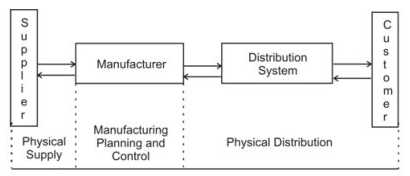
Which of the following phrases most accurately describes the complete flow of demand information?
- A. From supplier to customer
- B. From customer to manufacturer
- C. From customer to supplier
- D. From supplier to manufacturer
Answer:
C
Explanation:
The flow of demand information in a supply chain starts with the customer, who initiates demand for
products or services. This demand information then moves upstream to the manufacturer, who
needs to know the customer demand to plan production and control inventory. From the
manufacturer, the demand information continues upstream to the supplier, who provides the raw
materials or components needed for manufacturing. Therefore, the complete flow of demand
information is accurately described as moving from the customer to the supplier.
Reference
Chopra, S., & Meindl, P. (2016). Supply Chain Management: Strategy, Planning, and Operation.
Pearson.
Simchi-Levi, D., Kaminsky, P., & Simchi-Levi, E. (2008). Designing and Managing the Supply Chain:
Concepts, Strategies, and Case Studies. McGraw-Hill.
Question 2
The focus of collaborative supply chain management differs from a transactional approach by its
emphasis on the:
- A. transportation of goods to the next link in the chain.
- B. flow of product information up to the next level of the chain.
- C. flow of demand information and cash up the chain.
- D. flow of supply into an organization.
Answer:
C
Explanation:
Collaborative supply chain management focuses on the integration and coordination of the supply
chain entities to enhance overall performance. Unlike a transactional approach, which primarily
emphasizes the exchange of goods or services, a collaborative approach emphasizes the flow of
demand information and cash up the chain. This means that information about customer demand
and financial transactions move upstream, enabling all parties in the supply chain to better plan and
execute their operations in alignment with actual market demand, leading to improved efficiency
and responsiveness.
Reference
Lambert, D. M. (2008). Supply Chain Management: Processes, Partnerships, Performance. Supply
Chain Management Institute.
Mentzer, J. T., DeWitt, W., Keebler, J. S., Min, S., Nix, N. W., Smith, C. D., & Zacharia, Z. G. (2001).
Defining supply chain management. Journal of Business logistics, 22(2), 1-25.
Question 3
Which of the following scenarios represents a correct application of the Supply-Chain Operations
Reference-model (SCOR)?
- A. Sales and marketing refers to SCOR to improve demand generation.
- B. Production and engineering uses SCOR best practices to design a new "make" process flow.
- C. Distribution and logistics selects suppliers from the SCOR reference list.
- D. Marketing and development incorporates SCOR Level I metrics for new product design.
Answer:
B
Explanation:
The Supply-Chain Operations Reference-model (SCOR) is a process reference model that provides a
comprehensive framework for evaluating and improving supply chain performance. It includes best
practices for various supply chain processes such as plan, source, make, deliver, return, and enable.
In this context, the production and engineering departments using SCOR best practices to design a
new "make" process flow is a correct application of the model. The "make" process in SCOR focuses
on production activities, and leveraging SCOR's best practices helps in designing efficient and
effective production processes.
Reference
Supply Chain Council. (2012). Supply Chain Operations Reference Model (SCOR) Version 11.0. Supply
Chain Council, Inc.
Bolstorff, P., & Rosenbaum, R. (2007). Supply Chain Excellence: A Handbook for Dramatic
Improvement Using the SCOR Model. AMACOM.
Question 4
The primary objective of supply chain management is:
- A. minimizing transportation costs.
- B. reducing inventory levels.
- C. taking a systems approach.
- D. implementing advanced technologies.
Answer:
C
Explanation:
The primary objective of supply chain management is to take a systems approach. This involves
viewing the supply chain as a whole, rather than as a collection of separate entities. By taking a
systems approach, supply chain management aims to integrate and coordinate the activities of
suppliers, manufacturers, and distributors to optimize overall performance and achieve efficiencies
across the entire supply chain. This holistic perspective ensures that decisions made in one part of
the supply chain consider the impacts on other parts, leading to improved customer satisfaction,
reduced costs, and better use of resources.
Reference
Christopher, M. (2016). Logistics & Supply Chain Management. Pearson UK.
Stadtler, H., & Kilger, C. (Eds.). (2008). Supply Chain Management and Advanced Planning: Concepts,
Models, Software, and Case Studies. Springer Science & Business Media.
Question 5
Which of the following levels in a supply chain network represents the most upstream external
activity?
- A. Supplier to contractor
- B. Manufacturing to supplier
- C. Customer to distribution
- D. Customer to contractor
Answer:
A
Explanation:
In a supply chain network, the levels can be categorized into various stages, from raw material
suppliers to end customers. The "most upstream external activity" refers to the earliest stage in the
supply chain that is external to the organization. Here’s a breakdown of the options:
Supplier to contractor: This represents the activity between the supplier (who provides raw
materials) and a contractor (who might process these materials). This is the most upstream activity
as it deals with the initial stages of acquiring raw materials.
Manufacturing to supplier: This would imply the flow from manufacturing (internal) back to the
supplier, which doesn't fit the context of upstream activity.
Customer to distribution: This is a downstream activity, focusing on moving products closer to the
end customer.
Customer to contractor: This is also downstream and focuses on the interaction after the product is
finished. Thus, "Supplier to contractor" is the most upstream external activity, dealing with raw
material acquisition and initial processing stages.
Reference
Chopra, S., & Meindl, P. (2016). Supply Chain Management: Strategy, Planning, and Operation.
Mentzer, J. T. (2001). Supply Chain Management.
Question 6
Which of the following marketing strategies emphasizes offering services at a lower price than rival
services with comparable features?
- A. Cost leadership
- B. Service differentiation
- C. Customer focus
- D. Market responsiveness
Answer:
A
Explanation:
Cost leadership is a strategy where a company aims to become the lowest-cost producer in its
industry. By offering services or products at a lower price than competitors, while maintaining
comparable features, the company can attract price-sensitive customers. Here’s an explanation of
the options:
Cost leadership: Focuses on minimizing costs and passing on savings to customers through lower
prices.
Service differentiation: Involves offering unique services that justify a higher price.
Customer focus: Prioritizes customer needs and tailoring services/products to meet those needs.
Market responsiveness: Involves quickly adapting to market changes and customer demands.
Therefore, cost leadership emphasizes offering services at a lower price while maintaining
comparable features to rival services.
Reference
Porter, M. E. (1985). Competitive Advantage: Creating and Sustaining Superior Performance.
Barney, J. B., & Hesterly, W. S. (2012). Strategic Management and Competitive Advantage.
Question 7
The primary reason for the evolution of the supply chain is:
- A. fewer rejects due to poor quality.
- B. increased on-time delivery.
- C. increased cost savings.
- D. increased communication.
Answer:
D
Explanation:
The primary reason for the evolution of the supply chain is the enhancement of communication
technologies and practices. Improved communication facilitates better coordination and integration
across the entire supply chain, leading to various benefits:
Increased on-time delivery: Achieved through better communication and coordination among supply
chain partners.
Increased cost savings: Through efficient communication reducing delays and inventory costs.
Fewer rejects due to poor quality: Enabled by effective information exchange about quality standards
and specifications. Thus, increased communication is the foundational factor driving improvements
and evolution in supply chain management.
Reference
Christopher, M. (2016). Logistics & Supply Chain Management.
Simchi-Levi, D., Kaminsky, P., & Simchi-Levi, E. (2008). Designing and Managing the Supply Chain.
Question 8
Which of the following factors typically is the most significant impediment to implementing
collaborative commerce?
- A. Technology barriers
- B. Security
- C. Corporate culture
- D. Return on investment (ROI)
Answer:
C
Explanation:
Corporate culture is often the most significant impediment to implementing collaborative
commerce. Collaborative commerce involves different organizations working closely together,
sharing information and processes to optimize the supply chain. Here’s why:
Technology barriers: While important, these can often be overcome with investment in the right
solutions.
Security: Concerns can be addressed through robust security protocols and measures.
Corporate culture: This can be deeply ingrained and resistant to change. Organizational silos, lack of
trust, and resistance to sharing information are common cultural barriers.
Return on investment (ROI): While crucial, it’s often a result of overcoming cultural and technological
barriers. Corporate culture is the underlying factor that influences the willingness and ability of
organizations to collaborate effectively.
Reference
McAfee, A., & Brynjolfsson, E. (2008). Investing in the IT That Makes a Competitive Difference.
Lambert, D. M. (2008). Supply Chain Management: Processes, Partnerships, Performance.
Question 9
Compared to a global strategy, a multicountry strategy would be characterized by:
- A. strategy coordination across countries.
- B. preferred suppliers located in host countries.
- C. major strategic decisions coordinated centrally.
- D. products adapted to local needs.
Answer:
D
Explanation:
A multicountry strategy focuses on tailoring products and strategies to fit the specific needs and
preferences of each local market. This is in contrast to a global strategy, which seeks to standardize
products and strategies across all markets to achieve economies of scale. In a multicountry strategy,
companies adapt their products to meet the unique demands of customers in each country, which
often involves decentralized decision-making to ensure that local preferences and conditions are
addressed effectively.
Reference
Bartlett, C. A., & Ghoshal, S. (1989). Managing Across Borders: The Transnational Solution. Harvard
Business School Press.
Hitt, M. A., Ireland, R. D., & Hoskisson, R. E. (2016). Strategic Management: Competitiveness and
Globalization. Cengage Learning.
Question 10
Which of the following corporate strategies is most consistent with a flexible supply chain strategy?
- A. Being the low-price leader
- B. Providing the highest-quality service
- C. Providing mature products with stable sales
- D. Emphasizing the quality of the product
Answer:
B
Explanation:
A flexible supply chain strategy is designed to respond quickly and efficiently to changing market
conditions and customer needs. Providing the highest-quality service aligns well with a flexible
supply chain strategy, as it requires the ability to adapt to customer demands, handle customization,
and ensure quick response times. This level of service often necessitates a supply chain that can
pivot rapidly and handle variability without sacrificing quality, making flexibility a critical component.
Reference
Chopra, S., & Meindl, P. (2016). Supply Chain Management: Strategy, Planning, and Operation.
Pearson.
Lee, H. L. (2004). The Triple-A Supply Chain. Harvard Business Review, 82(10), 102-113.
Question 11
Which of the following considerations is an important supply chain design decision?
- A. Product design
- B. Selecting supporting information systems
- C. Identifying labor force requirements
- D. Identifying training programs
Answer:
B
Explanation:
Selecting supporting information systems is a crucial supply chain design decision. Effective
information systems are essential for managing and coordinating supply chain activities, such as
inventory management, order processing, demand forecasting, and logistics. The right information
systems enable real-time visibility, data analytics, and seamless communication across the supply
chain, enhancing overall efficiency and responsiveness.
Reference
Simchi-Levi, D., Kaminsky, P., & Simchi-Levi, E. (2008). Designing and Managing the Supply Chain:
Concepts, Strategies, and Case Studies. McGraw-Hill.
Laudon, K. C., & Laudon, J. P. (2015). Management Information Systems: Managing the Digital Firm.
Pearson.
Question 12
When designing a supply chain for strategic advantage, a company first should consider:
- A. the impact on customers using Just-in-Time manufacturing.
- B. the financial stability of suppliers.
- C. matching the supply chain to product type.
- D. whether to use custom or standard parts.
Answer:
C
Explanation:
When designing a supply chain for strategic advantage, the first consideration should be matching
the supply chain to the product type. Different products have different requirements in terms of
production, distribution, and inventory management. For instance, functional products with
predictable demand benefit from efficient supply chains focused on cost minimization, while
innovative products with uncertain demand require responsive supply chains that emphasize
flexibility and speed.
Reference
Fisher, M. L. (1997). What is the right supply chain for your product? Harvard Business Review, 75(2),
105-116.
Chopra, S., & Meindl, P. (2016). Supply Chain Management: Strategy, Planning, and Operation.
Pearson.
Question 13
Supply chains delivering products or services are most able to respond quickly to changing market
requirements when:
- A. products have been standardized.
- B. products have a modular design.
- C. production processes have been standardized.
- D. production processes have been simplified.
Answer:
B
Explanation:
Supply chains are more responsive to changing market requirements when products have a modular
design. Modular design allows for flexibility and easier customization. Here’s a breakdown of why
modular design is crucial:
Standardized products: While standardization can streamline production, it limits flexibility.
Modular design: Enables quick reconfiguration of products to meet changing customer needs.
Modules can be independently developed, tested, and upgraded, allowing for rapid adaptation.
Standardized production processes: Standardizing processes can improve efficiency but does not
inherently provide the flexibility needed for rapid response.
Simplified production processes: Simplification can reduce complexity but does not equate to the
adaptability provided by modular design. Thus, modular design offers the best balance between
efficiency and flexibility, enabling supply chains to respond quickly to market changes.
Reference
Ulrich, K. T., & Eppinger, S. D. (2012). Product Design and Development.
Fine, C. H. (1998). Clockspeed: Winning Industry Control in the Age of Temporary Advantage.
Question 14
Risk pooling enables a lower total inventory level without affecting service levels based on which of
the following assumptions?
- A. Inventory turnover ratio can be reduced.
- B. Aggregate demand is more accurate than disaggregate demand.
- C. The planning time fence can be adjusted as needed.
- D. The supplier shares some risk for holding inventory.
Answer:
B
Explanation:
Risk pooling helps reduce total inventory levels without affecting service levels by leveraging the
principle that aggregate demand is more stable and predictable than disaggregate demand. Here’s
the rationale:
Inventory turnover ratio: Lowering the ratio does not directly relate to risk pooling.
Aggregate demand: Combining demand across multiple locations or products reduces variability,
leading to lower safety stock requirements and overall inventory levels.
Planning time fence: Adjusting this does not directly impact risk pooling principles.
Supplier risk sharing: While beneficial, it is not the primary principle of risk pooling. By pooling risks,
the variability of aggregate demand is reduced, allowing for lower inventory levels while maintaining
service levels.
Reference
Chopra, S., & Meindl, P. (2016). Supply Chain Management: Strategy, Planning, and Operation.
Simchi-Levi, D., Kaminsky, P., & Simchi-Levi, E. (2008). Designing and Managing the Supply Chain.
Question 15
The purpose of continuous improvement in the supply chain is to:
- A. eliminate the root causes of problems.
- B. improve interorganizational communication.
- C. develop better written procedures.
- D. reduce product costs.
Answer:
A
Explanation:
Continuous improvement in the supply chain focuses on eliminating the root causes of problems.
This proactive approach ensures long-term efficiency and effectiveness. Here’s an explanation:
Root causes: Addressing the fundamental issues prevents recurrence and leads to sustainable
improvements.
Interorganizational communication: While important, it is a means to an end rather than the core
purpose.
Written procedures: Improving procedures is beneficial but secondary to addressing root causes.
Product costs: Reducing costs is a benefit of continuous improvement but not the primary purpose.
By eliminating root causes, continuous improvement leads to systemic and lasting enhancements in
the supply chain.
Reference
Liker, J. K. (2004). The Toyota Way: 14 Management Principles from the World's Greatest
Manufacturer.
Imai, M. (1986). Kaizen: The Key to Japan's Competitive Success.